
This article first published on Oct. 19, 2026 in Christianity Today Magazine.
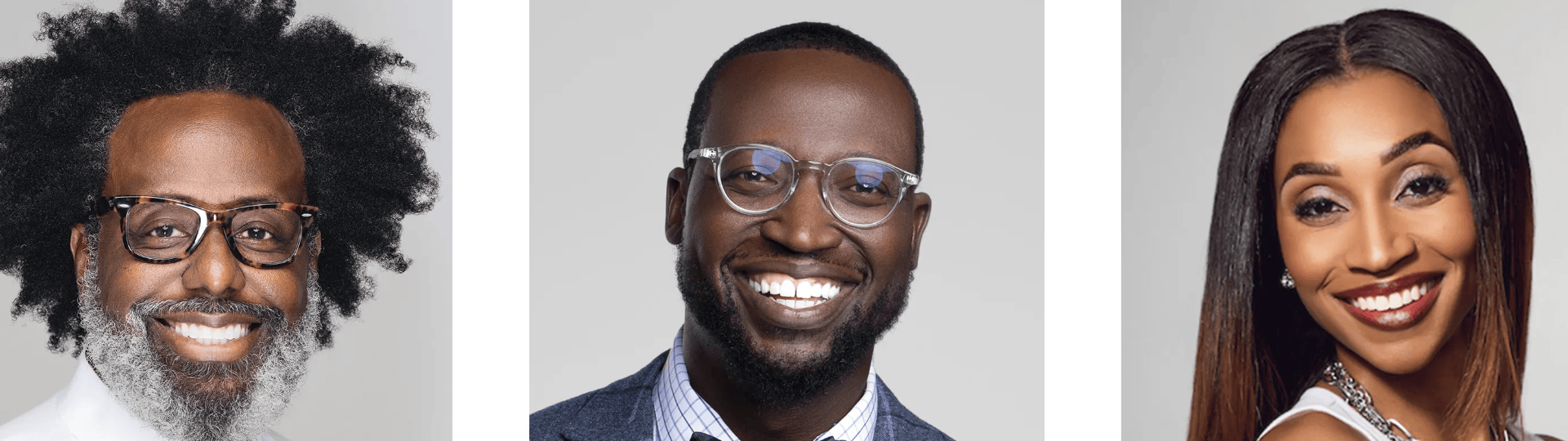
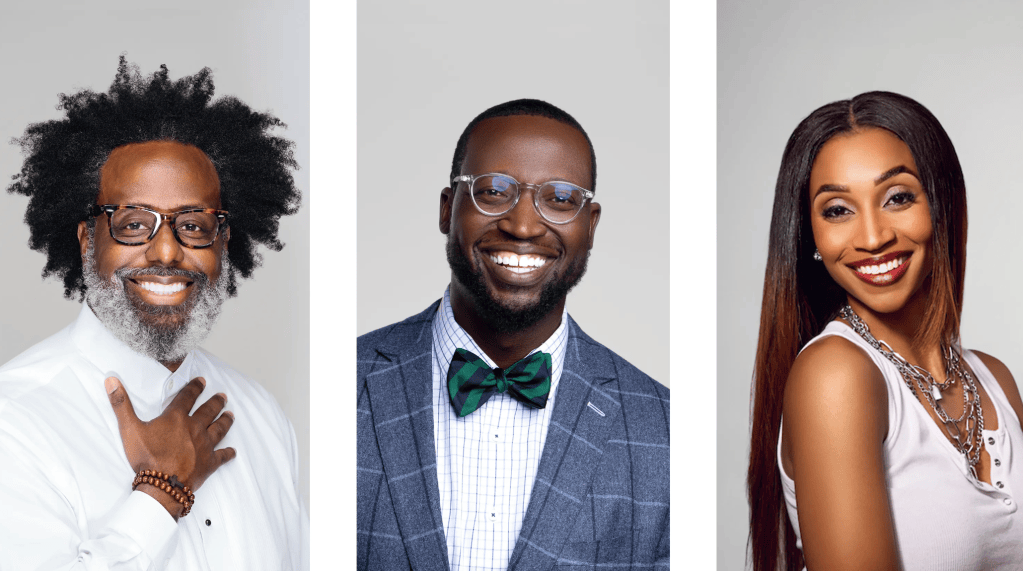
hitney Moss’s 1 million Instagram followers tune in for her comedy sketches about Christian dating. Marcus D. Wiley jokes about discovering how much groceries cost and taking food from his parent’s pantry. Mike Goodwin amuses crowds with Southern hospitality gimmicks and tales of how 40-year-olds are treated as babies or museum fossils depending on who’s talking.
Moss, Wiley, and Goodwin are part of the contemporary Black Christian comedy space. Each of them came to the craft differently: Goodwin got his start at local churches, Wiley at coffee shops, and Moss on social media. Over the course of time, they built an audience among Christians who want a laugh without feeling like they have to repent after. Some comedians explicitly brand their content as Christian comedy, but others don’t.
“I don’t think we have to label it ‘Christian comedy’ or ‘gospel comedy,’” Wiley said. “The Bible says you’ll know the tree by the fruit. Just go out there and produce—that’s what separates comedy in the kingdom from comedy just out in the marketplace.”
The Black Christian comedy scene began bubbling up between the 1930s and ’60s. Performers would hit the Chitlin’ Circuit, a network of entertainment venues—including Black churches—that were willing to host Black artists during segregation and Jim Crow. The genre became more mainstream when the faith-based comedy show Amen, starring Sherman Hemsley, hit NBC in 1986. Christian comedy grew from there, with the likes of Wiley, Goodwin, Pat G’Orge-Walker, Tanya Lewis, and Akintunde Warnock paving the way.
Moss and Instagrammer Matthew Hudson are among the younger crop of comedians who have gained traction thanks largely to social media. Digital platforms have brought a new dimension to Black Christian comedy, extending the reach of comedians with different brands of jokes and audiences.
Generally, the Black Christian comedy genre can be divided into two categories: Christians intentionally using comedy to share the gospel in some way, and comedians who, whether or not they’re Christian, use church material that may appeal to believers, said Jamal-Dominique Hopkins, director of the Black church studies program at Baylor University.
Hopkins used Kevin Fredericks (known as KevOnStage), Chris Tucker, Steve Harvey, and Tyler Perry as examples of people who grew up in church and incorporate churchy content into their work but have more secular goals and appeal. The mark of a Christian comedian, Hopkins said, is whether the person is proclaiming Christ.
The three comedians who spoke to CT—Wiley, Moss, and Goodwin—say they share the goal of trying to make the gospel more known through their comedy. However, the people listening to them can be very different from one another.
Wiley officially got his start in 2002, when he was paid for a standup set at a coffee shop. Before that, he was a middle school teacher and a college professor teaching communications in Texas. He did comedy on the side while teaching. But he wasn’t serious about it until his first paid gig, when he realized he could make decent money telling jokes.
Some pastors who saw Wiley’s performance at coffee shops invited their congregants to his gigs and invited him to perform at their churches. Wiley then hit comedy clubs with routines about his marriage and common annoyances, like paying bills and budgeting. A few years down the line, he opened for the comedian Ali Siddiq on multiple tours.
The two have an ongoing relationship: Siddiq helped produce Wiley’s standup specials, and Wiley still opens shows for Siddiq from time to time. Wiley’s audience can sometimes skew more secular and non-Christian as a result. He’s mindful of that when he speaks—for one, he avoids explicitly quoting Scripture, instead choosing to bring up his faith in a more laid-back way. Social media has also helped him reach new and different audiences.
“It’s been a blessing,” Wiley said. “It’s put me in the front of some eyes that may have never seen or heard of me.”
Moss entered the professional comedy scene five years ago, when a social video of her fervently praying for her future husband went viral. She was single at the time and initially thought people would think she was desperate. But the video resonated with single Christian women—as well as some men—and gave her an initial burst of popularity. So she quit her job as a social worker for Tennessee’s Medicaid program and focused on her burgeoning career.
Moss got married two years ago, and her audience has grown even more since then. Her days now involve writing jokes and putting into practice the video-editing skills she’s been teaching herself for a decade plus. She’s still figuring out how to structure her material to make it as funny as possible while also using the videos to plant seeds of faith. Much of her online content touches on celibacy, praying, and submitting to her husband in their complementarian marriage.
“I invite the Holy Spirit when I’m making jokes. I be like, ‘Make this funnier,’” she said.
All three comedians told CT they are willing to cross lines in their comedy. But only under certain conditions.
“I don’t think anything is off-limits,” said Wiley, who’s currently touring the country. “But you need to have tact. For me … I need to have a destination for [a joke]. Where am I going with [it]?”
Wiley’s more risqué bits include jokes about sex with his wife. His overall goal, he says, is to be “hilariously helpful.”
“Did this joke help you? Whether it helped you with your perspective, whether it helped you with your reasoning, whether it helped you with your, whatever, situation, you know?” Wiley said.
Reading the room is also important: “Sometimes you got to know, ‘Okay, this is a room where the joke can work,’ and then sometimes you’re in a room and you go, ‘Nah, I ain’t gonna do it.’”
Moss is fine poking fun of herself. But she is careful about how she handles other people. She would, for example, never joke about people’s health conditions. “Most comedians feel like with humor, you get a pass to do anything,” she said. “With my kind of humor, what I’ve had to be careful of is being too shady. I feel like that can get mean.”
Goodwin says he will tell any joke if it’s funny enough to outweigh any offense. He has a bit in which he describes dodging women who are cougars. He joked that it feels like the lust is sitting in their throats—to the point that he can hear it when they talk.
Christian comedy needs to be as excellent as its secular counterpart, Goodwin said. That said, his goal is to be the type of speaker his pastor “doesn’t have to come back up and correct.”
He’s doing that live every night while currently on tour with breakout Christian comedian Leanne Morgan. Goodwin pivoted to comedy in 2005 after working as a guidance counselor at a private school in South Carolina. He did his first standup set at his church’s New Year’s Eve party, following encouragement from Warnock.
A US Army veteran, Goodwin says he purposefully stays away from politics and other hot-button topics in his material. His jokes are that of a Southern gentleman, with bits about his grandmother, former students, and the Devil. His work has been featured on Lifetime, BET, Amazon Prime, Trinity Broadcasting Network, and America’s Got Talent. But the success came after a period that contained some lows: During the first two years of his career, Goodwin performed well at some shows but bombed at others.
“I used to wonder, Why is this not consistent? [and] I had a conversation with the Lord. He said, ‘You’re not onstage for the audience. You’re onstage for yourself. You’re really enamored with Mike Goodwin, and you’re very self-absorbed,’” Goodwin said. “So now my wife texts me before every show, ‘Have fun. Bless the people.’ It’s going to be a good night if I’m endeavoring to bless the people. That’s the right posture.”


